Service Area
ENTERPRISE, NV
Our Las Vegas exchange desk manages property identification, qualified intermediary coordination, and closing logistics for investors focused on Enterprise, NV and surrounding neighborhoods. We bundle rigorous research with concierge service to keep 45-day identifications and 180-day closings on track.
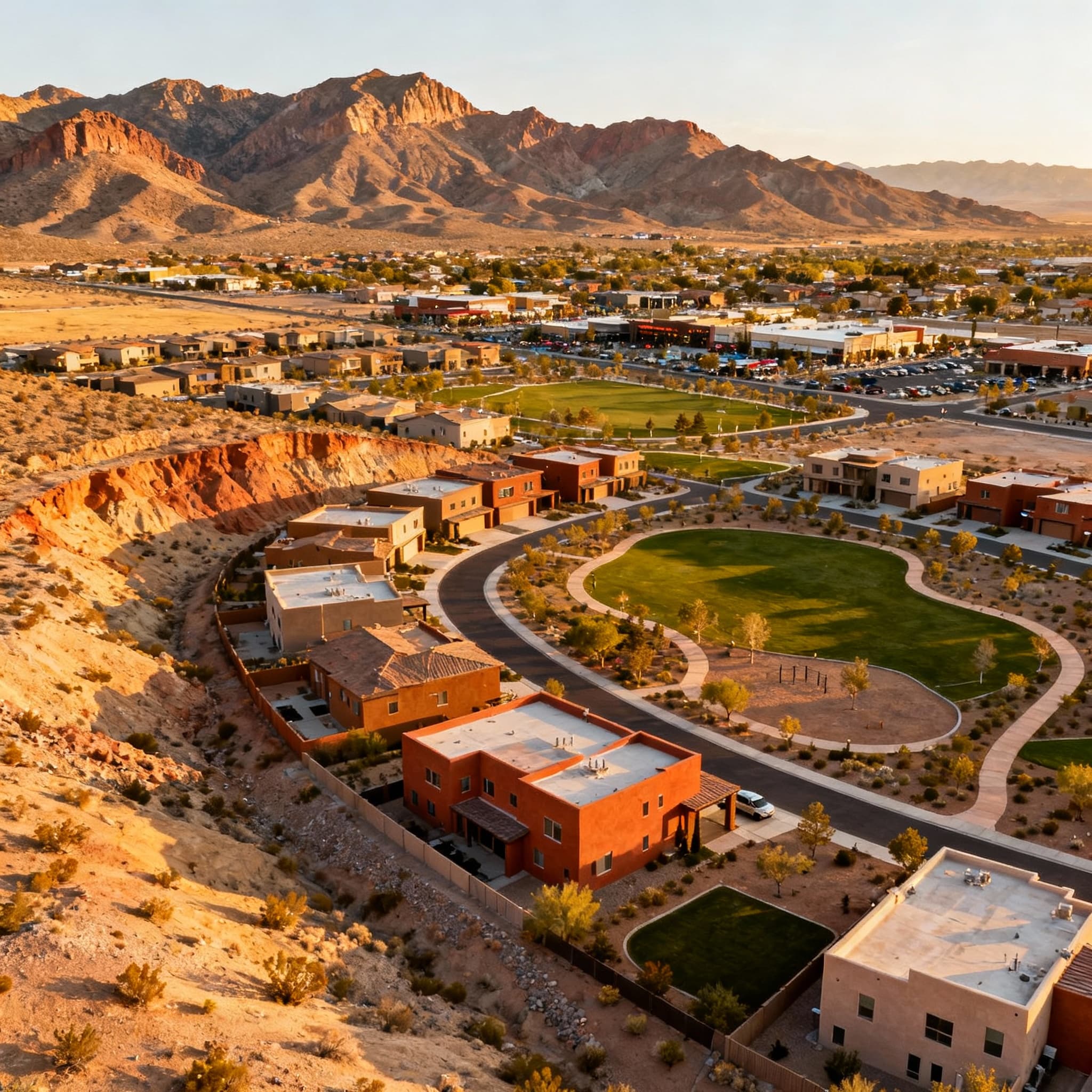
Enterprise sits in unincorporated Clark County south of the valley's older core, and its growth has followed the I-15 corridor south, pairing large-scale logistics development with master-planned residential and retail expansion. Because it's unincorporated, some entitlement and permitting timelines here run through the county rather than a city planning department, which matters for anything requiring a use change. That distinction rarely surfaces in a standard purchase contract, so it's worth raising directly with a seller or broker rather than assuming every parcel carries the same approval path as a similar property inside city limits.
Unincorporated Growth With an Industrial Backbone
Distribution and logistics buildings along the I-15 corridor have drawn national and regional operators wanting proximity to Harry Reid International Airport and the broader Las Vegas Beltway system without the land-cost premium closer to the Strip. Retail and multifamily development has followed the same southward push, often built out as part of larger master-planned communities where commercial parcels were platted alongside residential phases from the start. Medical and professional office has trailed the residential growth by a step, arriving once a critical mass of rooftops made the demand clear rather than anticipating it.
Enterprise's Working Asset Mix
A replacement search in Enterprise typically surfaces a consistent set of property types.
- logistics and distribution buildings along the I-15 corridor
- grocery-anchored and neighborhood retail inside master-planned communities
- newly built and recently stabilized multifamily communities
- medical and professional office serving the growing residential base
- light-industrial and flex space near the beltway interchange
Because much of this inventory was built within the last decade, comparable sales tend to be more recent and more reliable here than in older parts of the valley, but that also means less of a track record through a full economic cycle. Buyers used to underwriting older, seasoned product elsewhere in the metro should adjust their expectations accordingly rather than assuming Enterprise comps carry the same depth of history.
The 95 Percent Rule When Enterprise Product Is Still Under Construction
If an Enterprise logistics building or retail center is still under construction when you identify it, and you've also named enough other candidates to exceed the three-property rule's limits, the 95 percent rule requires closing on at least 95 percent of the combined value you identified. That's a stricter standard than the 200 percent rule, so confirm construction timelines realistically before relying on an unfinished Enterprise property as part of a multi-property identification strategy. Get the general contractor's current schedule in writing rather than relying on a verbal estimate from the seller, since a missed completion date can jeopardize the entire 200 percent structure if it pushes past your 180-day exchange period.
Financial Review on Recently Delivered Logistics Space
A trailing statement on a recently delivered Enterprise industrial building should be checked against the actual signed lease's rent-commencement date rather than a developer's projected stabilization schedule. Confirm which party is responsible for any remaining infrastructure work, such as rail spur access or additional power capacity, since unfinished site work can delay a tenant's occupancy and push back the income you're underwriting. Ask for the certificate-of-occupancy status specifically, since a building can look complete from the outside while still waiting on a final inspection sign-off that delays the tenant's actual move-in date.
Coordinating the Close With County Entitlement Timelines
Because Enterprise is unincorporated, any use change or permitting step runs through Clark County rather than a city department, and those timelines don't always match a 45-day identification window. A qualified intermediary should know upfront whether your target property needs any pending county approval, and your CPA reviewing Form 8824 will want documentation of that approval status alongside the purchase contract. Confirm every deadline and boot question with your own tax advisor and QI before relying on an entitlement that hasn't cleared yet. If a pending county approval is contingent on a public hearing date, build extra cushion into your closing timeline rather than assuming the hearing proceeds on the currently scheduled date.
Frequently Asked Questions
ENTERPRISE FAQS
Does unincorporated status affect how a 1031 exchange closes in Enterprise?
It doesn't change the exchange mechanics, but permitting and use-change approvals run through Clark County rather than a city department. Confirm any pending approval status with your qualified intermediary before relying on it to close on schedule.
What happens if I identify a still-under-construction Enterprise property alongside several others?
If your combined identified value exceeds 200 percent of your relinquished property's sale price, the 95 percent rule requires you to close on at least 95 percent of what you named. Confirm construction timelines are realistic before relying on unfinished product in that scenario.
How reliable are comparable sales for newer Enterprise logistics buildings?
More reliable than in older submarkets since most inventory was built recently, but it also means less of a track record through a full economic cycle. Weigh recent comps against that shorter history.
Who typically funds rail spur or power-capacity upgrades on Enterprise industrial buildings?
That varies by lease and by landlord, so confirm responsibility directly rather than assuming. Unfinished infrastructure work can delay tenant occupancy and push back the income you're underwriting.
Does master-planned retail in Enterprise carry the same identification rules as standalone retail elsewhere?
Yes, the exchange rules don't distinguish between master-planned and standalone retail. The difference is practical: master-planned centers often have entitlement conditions tied to the broader community plan that are worth confirming before identification.
Contact
Contact the Las Vegas team
Share your timeline, property type, and location. We will respond within one business day.
COORDINATE YOUR EXCHANGE IN ENTERPRISE, NV
Get free guidance organizing the property search, exchange timeline, and introductions to the independent professionals your transaction requires.